

If you have PCOS, there is a good chance you have already come across inositol.
Maybe you have seen it recommended in a forum. Maybe a friend mentioned it. Maybe it appeared while you were searching for support with irregular cycles, ovulation, insulin resistance, cravings or trying to conceive.
But once you start looking, the information can quickly become confusing.
Myo-inositol. D-chiro-inositol. 40:1 ratios. Blood sugar. Hormones. Egg quality. Ovulation. Capsules, powders, sachets, blends, co-factors.
It can be a lot.
This article is here to make the science feel simpler. Not watered down. Not overpromised. Just clear, useful and grounded in what matters when you are living with PCOS and trying to support your body day to day.
Because inositol is not a magic switch. It is not a cure for PCOS. But it is one of the most talked-about nutrients in PCOS support for a reason, particularly because of its relationship with insulin signalling, metabolic health and ovarian function. A systematic review used to inform the 2023 international PCOS guideline noted that inositol may have insulin-sensitising effects, while also stating that its overall efficacy in PCOS management remains uncertain.
So, what does that mean in real life?
Let’s begin with the basics.
What are inositols?
Inositols are naturally occurring compounds found in the body and in some foods. They are sometimes referred to as vitamin-like substances, although they are not technically vitamins.
Your body uses inositols in cell signalling. In simple terms, that means they help cells respond to messages.
One of the most relevant messages in PCOS is insulin.
Insulin is the hormone that helps move glucose, or sugar, from your blood into your cells so it can be used for energy. In many women with PCOS, the body’s cells become less responsive to insulin. This is called insulin resistance. When this happens, the body may produce more insulin to try to keep blood sugar stable.
Insulin resistance is common in PCOS and is one of the reasons blood sugar balance, cravings, energy dips and metabolic health often become part of the PCOS conversation. NICE advises that women with PCOS should be informed about possible longer-term complications, including type 2 diabetes and cardiovascular disease, and encouraged towards healthy lifestyle and weight management where appropriate.
Inositols are often discussed because they are involved in the way insulin signals are passed inside cells.
That does not mean taking inositol “fixes” insulin resistance. PCOS is more complex than that. But it does help explain why inositol has become such a key ingredient in PCOS-focused supplements.
Inositol is not a magic switch. It is a support tool for some of the systems PCOS can make harder to balance.
Myo-inositol and D-chiro-inositol: what is the difference?
There are several forms of inositol, but the two you will most often see in PCOS supplements are:
Myo-inositol
and
D-chiro-inositol
They are related, but they are not identical.
Myo-inositol
Myo-inositol is the form most abundant in the body. It is heavily involved in cell signalling and is often discussed in relation to insulin sensitivity, ovarian function and egg development.
In PCOS support, myo-inositol is usually the leading form because it is closely linked with ovarian signalling and metabolic function.
D-chiro-inositol
D-chiro-inositol also plays a role in insulin signalling, particularly in pathways connected to glucose storage and metabolism.
It is usually used in much smaller amounts than myo-inositol in PCOS formulas. This is where the 40:1 ratio comes in.
Why is the 40:1 ratio commonly used?
Many PCOS-focused formulas use myo-inositol and D-chiro-inositol together in a 40:1 ratio.
This means there is much more myo-inositol than D-chiro-inositol.
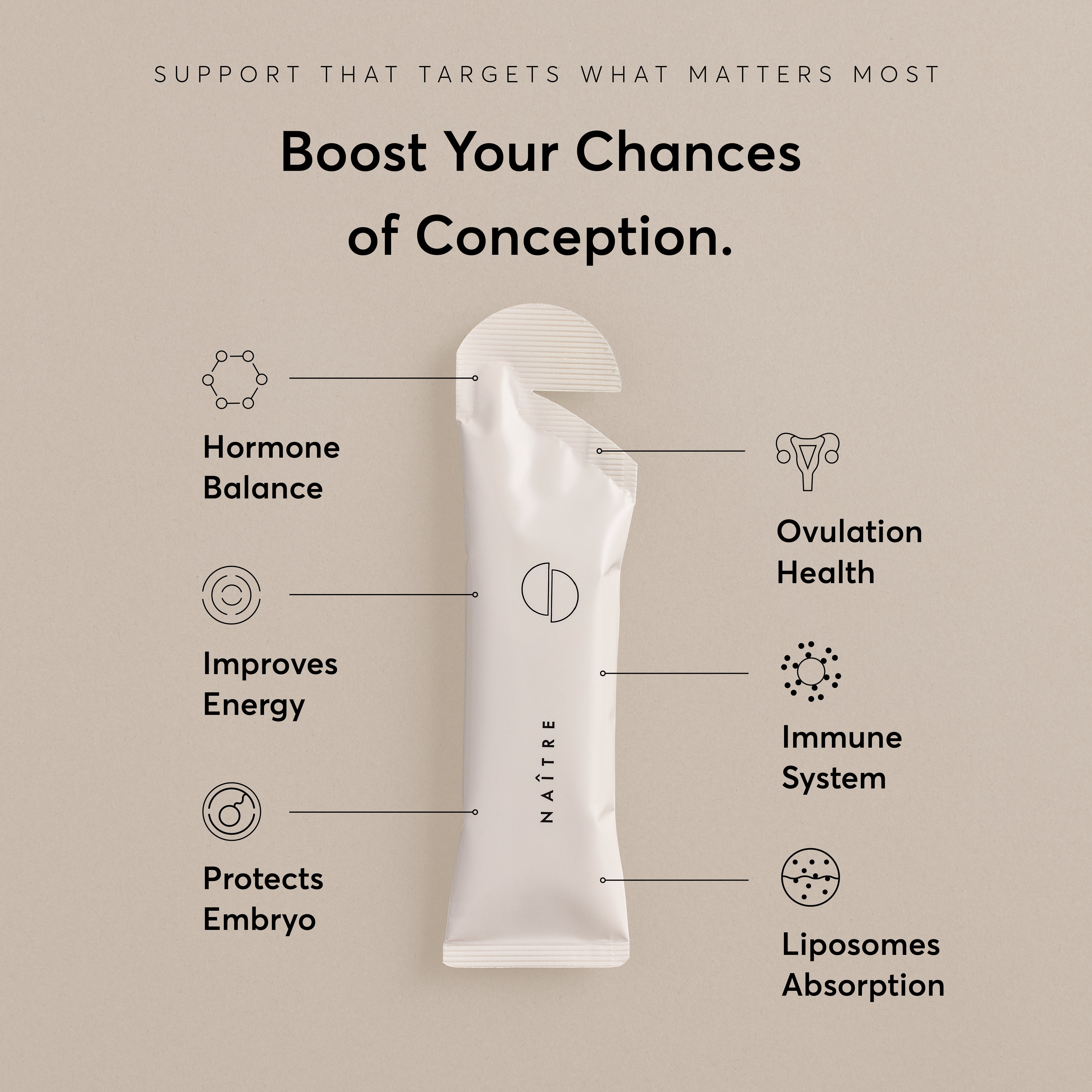
Naître’s Liposomal PCOS Support Formula follows this approach, with 2,000mg myo-inositol and 50mg D-chiro-inositol, giving a 40:1 ratio. It is designed as targeted, optional support for women with PCOS who are looking to support hormonal and metabolic balance, healthy cycles and pre-conception wellbeing.
The reason this ratio is often used is because it gives a dominant role to myo-inositol while still including a smaller amount of D-chiro-inositol.
That balance matters because more is not always better.
With supplements, it is tempting to think that a larger number must mean a stronger formula. But PCOS support is not only about high doses. It is about using ingredients in a thoughtful way, with the right supporting nutrients around them.
The 40:1 ratio has become a familiar reference point in PCOS-focused formulations because it reflects a balanced approach to combining these two forms, rather than treating them as interchangeable.
More is not always better. In PCOS support, the right balance can matter as much as the dose.
How inositol relates to metabolic support
For many women with PCOS, metabolic health is one of the biggest pieces of the puzzle.
This can show up as:
- Cravings
- Energy crashes
- Feeling hungry soon after eating
- Weight changes that feel hard to influence
- Irregular cycles
- Blood sugar concerns
- Higher insulin levels
- Difficulty knowing what your body needs
Not everyone with PCOS experiences these things in the same way. But insulin resistance is a common feature of PCOS, which is why lifestyle, nutrition and metabolic support are often discussed as part of care. The British Dietetic Association notes that low-GI dietary patterns can be useful in PCOS because they may help improve insulin levels and reduce insulin resistance.
Inositol is relevant because of its role in insulin signalling.
Think of insulin like a message being sent to the cell. Inositols are involved in some of the internal signalling pathways that help that message be understood.
When people describe inositol as “supporting insulin sensitivity”, this is the general idea they are referring to.
It is not a replacement for food, movement, sleep, medical care or any prescribed medication. But it can sit within a broader daily routine designed to support more stable metabolic function.
That broader routine might include:
- Protein with breakfast
- Fibre-rich meals
- Lower-GI carbohydrates more often
- Regular movement
- Gentle strength training
- Sleep support
- Stress reduction
- A consistent supplement habit
Inositol works best as part of a pattern, not as a quick fix.
How inositol relates to hormonal support
PCOS is often described as a hormonal condition, but hormones do not operate in isolation.
Insulin, androgens, ovarian signalling, ovulation, cycle regularity and metabolic health all interact with each other.
When insulin levels are higher, this can influence androgen levels in some women with PCOS. Higher androgens can then contribute to symptoms such as irregular cycles, acne, excess facial or body hair, and difficulties with ovulation.
This is why metabolic support and hormonal support are so closely linked in PCOS.
Supporting blood sugar and insulin signalling may help create a more favourable environment for reproductive hormone balance. That does not mean every symptom will change quickly, or that inositol alone can regulate a cycle. But it helps explain why so many PCOS formulas focus on metabolic pathways as well as reproductive wellbeing.
The 2023 International Evidence-Based Guideline for PCOS takes a broad view of PCOS care, including reproductive, metabolic, lifestyle and psychological features, rather than focusing on one symptom alone.
That is important because PCOS is rarely solved by one intervention. It often needs a layered approach.
How inositol relates to cycles and ovulation
If you are trying to conceive with PCOS, inositol may have come up in relation to ovulation.
This makes sense. PCOS can affect ovulation, making cycles longer, irregular or less predictable. For some women, ovulation may happen later than expected. For others, it may not happen regularly without additional support.
Inositol is often discussed because of its relationship with insulin signalling and ovarian function. If metabolic signalling improves, this may support a healthier hormonal environment for ovulation in some women.
But the wording matters.
Inositol does not guarantee ovulation. It does not guarantee pregnancy. And if your cycles are absent, very long or highly irregular, it is important to seek medical advice rather than relying on supplements alone.
A helpful way to think about inositol is this:
It is not there to force your body into a textbook cycle.
It is there to support the systems that your cycle depends on.
For many women with PCOS, that distinction feels more realistic and less pressurised.
Why co-factors matter too
A good PCOS supplement should not only focus on one ingredient.
Inositol may be the hero, but co-factors matter because PCOS affects more than one pathway. Metabolic health, energy, methylation, reproductive wellbeing, oxidative stress and nutrient sufficiency can all be part of the picture.
Naître’s PCOS Support Formula combines myo-inositol and D-chiro-inositol with supportive co-factors including NAC, folate, chromium, zinc, magnesium, vitamin C and vitamin B12.
Here is why those supporting nutrients are relevant.
NAC
NAC stands for N-acetyl L-cysteine.
It is a precursor to glutathione, one of the body’s important antioxidant compounds. In reproductive health conversations, NAC is often discussed in relation to oxidative stress and cellular protection.
In PCOS, oxidative stress and metabolic function are often part of the wider discussion, so NAC can be a useful supporting ingredient within a broader formula.
Naître’s PCOS Support Formula includes NAC as part of its wider co-factor support.
Folate
Folate is especially important during the pre-conception stage because it contributes to maternal tissue growth during pregnancy and supports normal cell division.
This matters because some of the earliest stages of pregnancy happen before you may know you are pregnant.
For women trying to conceive, folate is one of the foundational nutrients to consider. Naître’s PCOS Support Formula includes folate as L-5-methyltetrahydrofolate calcium, also known as L-5-MTHF.
Chromium
Chromium contributes to the maintenance of normal blood glucose levels.
That makes it especially relevant in a PCOS formula designed to support metabolic balance and normal blood glucose metabolism.
Naître’s PCOS Support Formula includes chromium as chromium picolinate.
Zinc
Zinc contributes to normal fertility and reproduction, as well as the normal function of the immune system.
For women trying to conceive with PCOS, zinc is a useful nutrient to see in a pre-conception formula because it supports reproductive wellbeing more broadly.
Naître’s PCOS Support Formula includes zinc as zinc picolinate.
Magnesium
Magnesium is involved in many normal processes in the body, including energy metabolism, muscle function and nervous system function.
It is also a nutrient many people associate with calm, sleep and everyday wellbeing, although those effects can vary from person to person.
Naître’s PCOS Support Formula includes magnesium as magnesium bisglycinate.
Vitamin B12
Vitamin B12 contributes to normal energy-yielding metabolism and the reduction of tiredness and fatigue. It also works alongside folate in methylation processes.
This is particularly relevant for women who are trying to conceive and want to support pre-conception nutrient status.
Naître’s PCOS Support Formula includes methylcobalamin, a form of vitamin B12.
Vitamin C
Vitamin C contributes to the protection of cells from oxidative stress, supports normal immune function and contributes to normal collagen formation.
In a PCOS supplement, vitamin C is not the central ingredient, but it provides useful antioxidant and everyday wellbeing support.
Naître’s PCOS Support Formula includes vitamin C as sodium ascorbate.
What to look for in a daily PCOS supplement
When you are choosing a PCOS supplement, it is easy to get pulled into comparing one number with another.
But the better question is not only “how much is in it?”
It is also:
Is the formula thoughtful?
Is it easy to take every day?
Does it support the wider PCOS picture?
Does it fit your current stage: TTC, pregnancy or neither?
Here are a few things to look for.
1. Myo-inositol and D-chiro-inositol together
For PCOS support, many people look for both myo-inositol and D-chiro-inositol, often in a 40:1 ratio.
Naître’s formula contains 2,000mg myo-inositol and 50mg D-chiro-inositol in this ratio.
2. Supportive co-factors
Because PCOS is not only about one pathway, look for a formula that includes supporting nutrients too.
Ingredients like folate, chromium, zinc, magnesium, B12, vitamin C and NAC can help create broader nutritional support around inositol.
3. A format you will actually take
This sounds simple, but it matters.
The best supplement is not helpful if it sits in the cupboard.
Naître’s PCOS Support Formula is a daily liquid gel sachet in watermelon raspberry flavour, designed to be convenient and easy to build into a routine.
For some people, a sachet is easier than swallowing multiple tablets or mixing powders. For others, the benefit is having one daily habit that feels simple and repeatable.
Consistency is where the support comes from.
4. Clear guidance around TTC and pregnancy
This is especially important.
Naître’s PCOS Support Formula is suitable while trying to conceive. Once pregnancy is confirmed, it should be discontinued and the customer should move to a dedicated pregnancy formula.
That is because nutritional needs change once you are pregnant.
If you get a positive pregnancy test, stop taking PCOS Support and speak with your GP, midwife or healthcare provider if you have questions about your next steps.
5. Supportive claims, not miracle claims
Be cautious with any supplement that promises to cure PCOS, guarantee ovulation or make you pregnant.
PCOS is too personal and too complex for that kind of promise.
Good PCOS supplementation should be framed as support: support for metabolic balance, healthy cycles, pre-conception wellbeing and everyday consistency.
That is the responsible way to talk about PCOS. It is also the kinder way.
How long does inositol take to work?
This is one of the most common questions.
The honest answer is that everyone is different. Some women notice changes in energy, cravings or cycle patterns within a few weeks. For others, it takes longer. Some may not notice obvious changes at all.
Because PCOS symptoms and cycles can shift slowly, it is usually more helpful to think in terms of consistency over several weeks rather than expecting a dramatic change within days.
An 8–12 week window can be a useful timeframe for building a routine and observing patterns. This gives your body time to receive repeated nutritional support, while also allowing you to notice changes beyond one isolated week or cycle.
During that time, you might track:
- Cycle length
- Energy
- Cravings
- Mood
- Skin changes
- Appetite
- PMS symptoms
- Sleep
- Ovulation signs, if TTC
Try not to track everything if it makes you anxious. Choose two or three signs that feel useful rather than overwhelming.
Inositol works best with the basics
V
It is tempting to want one ingredient to do all the work.
But inositol works best when it sits inside a supportive routine.
That does not mean a perfect routine. It means a repeatable one.
A PCOS-supportive foundation might include:
- Protein with breakfast
- Regular meals
- Fibre-rich carbohydrates
- Lower-GI swaps where possible
- Daily movement
- Strength training if it feels accessible
- Sleep support
- Stress support
- A consistent supplement habit
The British Dietetic Association notes that low-GI foods can help blood sugar rise more slowly and may support insulin levels and insulin resistance in people with PCOS.
You do not need to do everything at once.
Start with the things you can repeat.
A simple way to build inositol into your day
The easiest supplement routine is the one attached to something you already do.
Try pairing your sachet with:
- Breakfast
- Your first glass of water
- Your morning coffee or tea
- Brushing your teeth
- Preparing your bag for work
- Taking other daily supplements
- Your partner’s supplement routine, if TTC together
A routine does not need to feel special to be effective. It just needs to be easy enough to come back to tomorrow.
When to speak with a healthcare professional
Supplements can be helpful, but they are not a replacement for medical advice.
Speak with a GP, specialist, dietitian or healthcare professional if:
- Your periods are absent or very infrequent
- You are trying to conceive and not sure if you are ovulating
- You have been trying to conceive for 12 months, or 6 months if over 35
- You have symptoms that are worsening
- You have concerns about blood sugar or insulin resistance
- You are taking prescribed medication
- You have a medical condition
- You are pregnant or think you may be pregnant
- You are unsure whether a supplement is suitable for you
PCOS care should be individual. You deserve support that reflects your symptoms, your goals and your stage of life.
The takeaway
Inositol is one of the most talked-about nutrients in PCOS support because it sits close to some of the systems many women with PCOS are trying to support: insulin signalling, metabolic balance, hormonal wellbeing, cycles and ovulation.
But it is not magic.
It is a support tool.
Myo-inositol and D-chiro-inositol each play different roles, which is why they are often combined. The 40:1 ratio is commonly used in PCOS-focused formulas because it gives myo-inositol the leading role while still including D-chiro-inositol in a smaller amount.
Co-factors matter too. Nutrients like NAC, folate, chromium, zinc, magnesium, vitamin C and B12 help create a more complete formula, especially for women looking for targeted pre-conception support.
Most importantly, inositol is not there to make your routine more complicated.
It is there to become one steady part of it.
One sachet.
One daily rhythm.
One supportive step towards feeling more informed, more consistent and more connected to your body.
The most helpful supplement routine is not the most complicated one. It is the one you can repeat.