

Breakfast can feel strangely complicated when you have PCOS.
You may have heard that you should eat low carb. Or high protein. Or avoid sugar. Or fast until lunch. Or never skip breakfast. Or only eat oats. Or definitely not eat oats.
And somehow, in the middle of all that advice, you are still standing in the kitchen tomorrow morning wondering: what do I actually eat?
This guide is here to make that decision easier.
Not perfect. Not restrictive. Just easier.
Because for many women with PCOS, the first meal of the day can set the tone for energy, cravings, mood and appetite. That does not mean breakfast has to be flawless, or that everyone with PCOS must eat the same way. But a more balanced breakfast can be one of the simplest ways to support steadier blood sugar and help your body feel more nourished from the start.
PCOS is commonly linked with insulin resistance, which can affect how the body manages blood sugar. NICE advises healthy lifestyle and optimal weight management where appropriate to help reduce longer-term risks and improve clinical features of PCOS, while the British Dietetic Association notes that lifestyle choices, including food and activity, can help with symptom management.
But this is not a “diet rules” article.
This is a breakfast article.
So let’s get practical.
Why breakfast can set the tone for PCOS energy and cravings
After a night without food, your body is ready for fuel.
If breakfast is mostly quick-release carbohydrate — for example, a pastry, sugary cereal, white toast with jam, or a sweet coffee on its own — it may give a fast lift in energy, followed by a dip later on.
That dip can feel like:
- Mid-morning hunger
- Shakiness
- Brain fog
- Cravings
- Irritability
- Reaching for more caffeine
- Feeling like you need something sweet to get through the morning
This is not about blaming breakfast. It is about understanding rhythm.
With PCOS, many people are trying to support steadier blood sugar and insulin levels. Low-GI, higher-fibre foods are often recommended because they tend to raise blood sugar more gradually, and eating regular balanced meals may also help support steadier blood sugar.
A blood sugar-friendly breakfast usually includes three things:
Protein
Fibre
Healthy fats
Carbohydrates can still be part of the meal. The difference is that they are not left to do all the work on their own.
Breakfast does not have to be perfect. It just has to give your body something steadier to work with.
The “protein first” principle
If you only make one breakfast change, make it this:
Add protein first.
Protein helps you feel fuller for longer, slows digestion and supports a steadier release of energy. It can also make breakfast feel more satisfying, which may reduce the “hungry again an hour later” feeling.
Good breakfast proteins include:
- Eggs
- Greek yoghurt
- Cottage cheese
- Tofu
- Tempeh
- Smoked salmon
- Chicken or turkey slices
- Beans
- Lentils
- Chickpeas
- Protein powder
- Nuts and seeds as supporting additions
This does not mean breakfast has to become a bodybuilder meal. It just means giving your plate an anchor.
Toast is fine. But toast with eggs, avocado or nut butter will usually support you for longer than toast on its own.
Fruit is fine. But fruit with Greek yoghurt, chia seeds or nut butter is likely to feel steadier than fruit alone.
Oats are fine. But oats with protein, seeds and berries will usually work harder for you than plain oats made with water and syrup.
Think: what can I add to make this more supportive?
Add protein first. It is one of the simplest ways to make breakfast more supportive.
Easy breakfast formula 1: Eggs + fibre
Eggs are one of the easiest protein anchors for breakfast. Pair them with fibre-rich plants and, if you want, a slower-release carbohydrate.
Try:
- Scrambled eggs with spinach and wholegrain toast
- Boiled eggs with avocado and rye bread
- Omelette with mushrooms, tomatoes and peppers
- Poached eggs with sautéed greens and beans
- Egg muffins with vegetables, made ahead for busy mornings
A simple PCOS-friendly plate might be:
2 eggs + spinach + avocado + wholegrain toast
This gives you protein, fibre, healthy fats and carbohydrate in one balanced meal.
If mornings are rushed, boil a few eggs in advance and keep them in the fridge. Not glamorous, but very useful.
Easy breakfast formula 2: Greek yoghurt + seeds
Greek yoghurt is quick, high in protein and easy to customise.
Try:
- Greek yoghurt with berries, chia seeds and almond butter
- Greek yoghurt with apple, cinnamon and walnuts
- Greek yoghurt with flaxseed, pumpkin seeds and a small handful of granola
- Greek yoghurt with berries and crushed nuts
- Greek yoghurt with protein powder stirred in, if you need a bigger meal
To make it more blood sugar-friendly, avoid building the bowl around a large portion of sweetened granola or honey. You do not need to avoid sweetness completely, but the base should be protein-rich and filling.
A simple formula:
Greek yoghurt + berries + chia or flaxseed + nut butter
This gives you protein from the yoghurt, fibre from the berries and seeds, and healthy fats from the nut butter.
If you are dairy-free, choose a high-protein plant-based yoghurt where possible. Many coconut yoghurts are low in protein, so you may need to add protein powder, nuts, seeds or tofu-based options to make the meal more balanced.
Easy breakfast formula 3: Tofu scramble
Tofu scramble is a brilliant option if you are plant-based, avoiding eggs, or just want something savoury and satisfying.
Try crumbling firm tofu into a pan with:
- Olive oil
- Turmeric
- Black pepper
- Garlic
- Spinach
- Mushrooms
- Peppers
- Tomatoes
- Nutritional yeast, if you like it
Serve with avocado, beans, rye toast or roasted vegetables.
A simple plate:
Tofu scramble + mushrooms + spinach + avocado
Or, if you need something more filling:
Tofu scramble + black beans + wholegrain wrap
This gives protein, fibre and slow-release energy in a way that feels more like a meal than a snack.
Easy breakfast formula 4: Protein oats
Oats can absolutely have a place in a PCOS-friendly breakfast.
The key is to build them with protein and fat, rather than eating a bowl of plain oats with lots of sugar on top.
Try:
- Oats cooked with milk or fortified soya milk
- Stir in protein powder, Greek yoghurt or cottage cheese
- Add chia seeds or ground flaxseed
- Top with berries
- Add cinnamon
- Finish with nut butter or chopped nuts
A simple formula:
Oats + protein + seeds + berries + nut butter
This makes the meal slower, steadier and more satisfying.
If oats leave you hungry quickly, try reducing the portion slightly and increasing the protein. For example, smaller oats plus Greek yoghurt and chia seeds may work better than a very large bowl of oats alone.
Easy breakfast formula 5: Savoury toast, but upgraded
Toast is often treated as something to avoid, but it can be made much more supportive with the right toppings.
Instead of:
White toast + jam
Try:
- Wholegrain toast + eggs + avocado
- Rye toast + cottage cheese + tomatoes
- Sourdough + smoked salmon + cucumber
- Wholegrain toast + hummus + seeds
- Toast + peanut butter + chia seeds
- Toast + tofu scramble
- Toast + beans + spinach
The aim is not to remove the toast. It is to add support around it.
Easy breakfast formula 6: Smoothie with structure
Smoothies can be helpful, especially if you are not hungry in the morning. But they can also become very high in fruit and low in protein, which may not keep you full for long.
A more supportive smoothie includes:
Protein + fibre + fat + colour
Try blending:
- Protein powder or Greek yoghurt
- Berries
- Spinach
- Chia or flaxseed
- Nut butter
- Milk or fortified plant milk
- Optional oats if you need more energy
A simple formula:
Protein + berries + greens + seeds + nut butter
Try to avoid using only fruit juice and multiple portions of fruit as the base. That may taste lovely, but it can be less steady for blood sugar.
What to do if you are not hungry in the morning
Not everyone wakes up ready to eat.
That is okay.
The goal is not to force a huge breakfast. The goal is to avoid drifting into the day on caffeine alone, then crashing later.
If you are not hungry, try a smaller “starter” breakfast:
- Greek yoghurt with seeds
- A boiled egg
- A small protein smoothie
- A few oatcakes with nut butter
- Cottage cheese with berries
- A handful of nuts and a piece of fruit
- Half a slice of toast with egg or avocado
You can also delay breakfast slightly, especially if eating immediately makes you feel uncomfortable. The key is to notice whether skipping breakfast leads to cravings, overeating, low mood or energy dips later.
If it does, a small protein-rich option may help.
What if you prefer coffee first?
Many people do.
Coffee itself is not “bad”, but coffee on an empty stomach can make some people feel shaky, anxious or less hungry at first, followed by a crash later.
Try one of these gentle shifts:
- Have coffee after breakfast instead of before
- Have coffee with a small protein snack
- Add breakfast within an hour of coffee
- Choose a latte with milk or fortified soya milk rather than black coffee alone
- Keep a boiled egg, yoghurt or nuts nearby if mornings are rushed
You do not have to give up your morning coffee. Just try not to let it become your whole breakfast.
Common breakfast swaps for steadier energy
These are not rules. They are options.
Instead of cereal alone
Try:
Greek yoghurt + berries + seeds
or
Higher-fibre cereal + Greek yoghurt + nuts
Instead of toast and jam
Try:
Wholegrain toast + peanut butter + chia seeds
or
Toast + eggs + avocado
Instead of a pastry on the go
Try:
Egg bites + fruit
or
Greek yoghurt pot + nuts
Instead of fruit alone
Try:
Fruit + nut butter
or
Fruit + Greek yoghurt
Instead of plain porridge
Try:
Protein oats with chia, berries and nut butter
Instead of only coffee
Try:
Coffee + boiled egg
or
Coffee + small protein smoothie
Instead of skipping breakfast entirely
Try:
A small protein-rich snack now, then a proper meal later
These swaps are not about restriction. They are about giving your body something steadier to work with.
A week of easy PCOS breakfast ideas
Here are seven simple breakfasts you could rotate through the week.
Monday
Greek yoghurt with berries, chia seeds and almond butter.
Tuesday
Scrambled eggs with spinach, mushrooms and wholegrain toast.
Wednesday
Protein oats with flaxseed, cinnamon, berries and peanut butter.
Thursday
Tofu scramble with avocado and roasted tomatoes.
Friday
Rye toast with cottage cheese, cucumber, tomatoes and pumpkin seeds.
Saturday
Smoothie with protein, berries, spinach, chia seeds and almond butter.
Sunday
Eggs, beans, avocado and sautéed greens.
You can repeat meals as often as you like. Breakfast does not need novelty every day. Sometimes repetition is what makes healthy routines possible.
Your supplement routine is easiest when paired with a daily anchor
One reason breakfast matters is that it gives your day a natural anchor.
If you are taking a daily supplement, pairing it with breakfast can make the habit easier to remember.
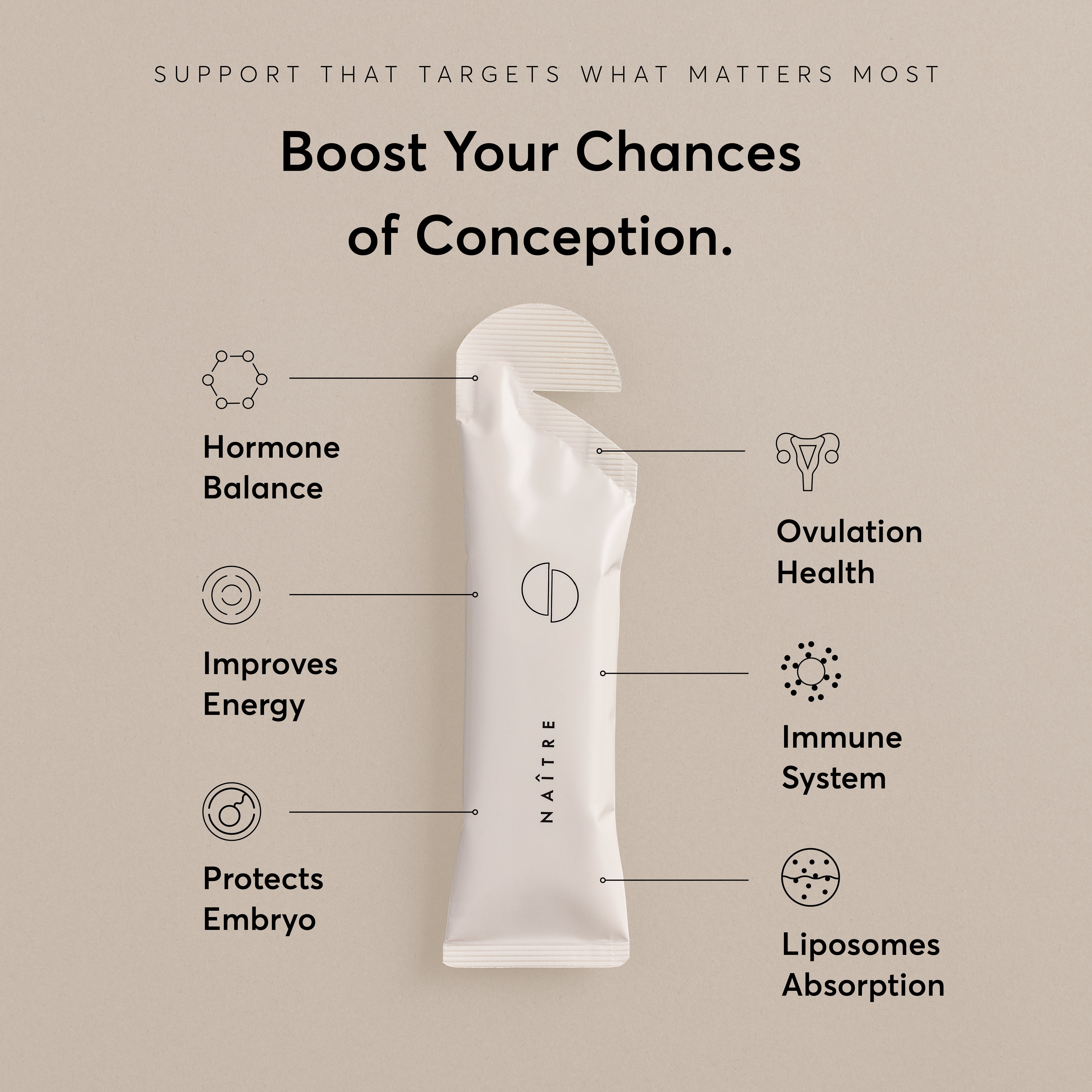
Naître’s PCOS Support Formula is a targeted, optional formula for women with PCOS, designed to support hormonal and metabolic balance, healthy cycles and pre-conception wellbeing. It contains myo-inositol and D-chiro-inositol in a 40:1 ratio, alongside co-factors including NAC, folate, chromium, zinc, magnesium, vitamin C and B12.
It is suitable while trying to conceive, but once pregnancy is confirmed it should be discontinued and you should move to a dedicated pregnancy formula.
A simple routine might be:
Breakfast. Sachet. Start the day.
No complicated system needed.
Building a PCOS-friendly breakfast plate
Here is a simple checklist:
1. Is there protein?
Eggs, yoghurt, tofu, cottage cheese, fish, beans, protein powder.
2. Is there fibre?
Vegetables, berries, oats, seeds, beans, wholegrains.
3. Is there healthy fat?
Avocado, olive oil, nuts, seeds, nut butter.
4. Is the carbohydrate working hard enough?
Oats, rye, wholegrain toast, sweet potato, beans, berries.
5. Will this keep me satisfied?
If not, add more protein or fat.
This checklist is not there to judge your plate. It is there to help you build one that supports you.
A note on weight, appetite and self-kindness
Breakfast advice can easily become another way to feel watched, judged or corrected.
That is not what this is.
PCOS can make appetite, cravings, weight and energy feel complicated. If breakfast has been difficult for you, it does not mean you lack willpower. It may mean your body has been asking for a steadier kind of support.
You are allowed to eat enough.
You are allowed to enjoy food.
You are allowed to choose convenience.
You are allowed to start small.
A PCOS-supportive breakfast should not feel like punishment. It should feel like care.
The takeaway
You do not need a perfect morning routine to support your PCOS.
You do not need to cut out every food you enjoy.
You do not need to eat the same thing as someone on Instagram.
Start with breakfast.
Add protein. Add fibre. Add healthy fats. Choose carbohydrates that give you steadier energy. Keep it simple enough to repeat.
A better breakfast will not solve PCOS overnight. But it can help your day feel more stable.
And sometimes, that is exactly where support begins.
A PCOS-supportive breakfast should not feel like punishment. It should feel like care.