

Unexplained infertility is one of the most frustrating diagnoses a couple can receive.
Hormone levels appear normal. Scans show nothing obvious. Cycles are regular. And yet — month after month — nothing happens.
For Sophie Kasaei and Jordan Brook, this was their reality for over two and a half years. From the outside, life carried on as usual — work, filming, travel, social commitments. But privately, their world revolved around ovulation windows, test results and the quiet, persistent hope that this month might finally be different.
“We were told everything looked fine,” Sophie explains. “Basic checks, standard testing. We were basically in that ‘unexplained’ category.”
But unexplained, as they would later discover, does not always mean unsolvable.
Looking Beyond “Unexplained”: The Diagnosis That Changed Everything
After months of disappointment, Sophie began to feel that something deeper was being missed. Her cycles were regular. She was healthy. But something didn’t sit right.
Eventually, further investigations revealed chronic endometritis — a persistent inflammation of the uterine lining that can affect implantation.
“It wasn’t something anyone had tested me for initially. We’d done the basic checks. But when they actually looked deeper, it was obvious.”
Chronic endometritis is frequently confused with endometriosis, but the two are very different conditions. Endometriosis involves tissue similar to the uterine lining growing outside the uterus. Chronic endometritis affects the lining inside the uterus itself — the precise environment where an embryo needs to implant.
When that lining is inflamed, the uterine environment can become less receptive. The challenge? Chronic endometritis often presents with few or no symptoms. Many women have regular cycles and feel otherwise well. It is not routinely screened for in early fertility investigations in the UK and typically requires a biopsy or hysteroscopy for diagnosis.
“It wasn’t dramatic,” Sophie says. “There weren’t obvious signs. That’s what makes it so frustrating.”
Once treated, the shift was swift.
“Two weeks later, we were pregnant. Naturally. It was incredible.”
For them, the word “unexplained” had simply meant “unexplored.”

Inflammation and Fertility: Connecting the Dots
Around the same time as her diagnosis, Sophie and Jordan began looking more seriously at inflammation — not as a buzzword, but as a biological factor that could influence fertility.
Chronic inflammation has been linked in research to implantation challenges, immune imbalance and reduced reproductive efficiency. While it is rarely the sole cause of fertility difficulties, it can form part of a broader picture.
Reducing inflammatory load became a shared priority.
They reassessed their diet. They improved hydration. They focused on sleep. They reduced high-intensity stressors. They walked more. They slowed down socially.
Jordan temporarily removed processed foods entirely, adopting a strict whole-food approach. Sophie focused on anti-inflammatory foods and nervous-system regulation.
“It wasn’t about doing one extreme thing. It was about supporting my body in every way we could.”
Instead of chasing quick fixes, they began building a foundation.
The Silent Side of Fertility: Male Mental Health and Sperm Health
While Sophie was undergoing testing, Jordan was navigating his own internal pressure.
“When you go for a sperm analysis, you don’t talk about how scary that feels. You start thinking, what if it’s me? What if I can’t give her what she wants?”
Male fertility accounts for around 40–50% of conception outcomes, yet men are often under-informed and emotionally unsupported during fertility investigations.
Sperm health — including motility, morphology and count — plays an equally critical role in conception. Lifestyle factors such as diet, alcohol intake, sleep and stress can influence these parameters.
“There’s pressure to be strong,” Jordan says. “But this was one of the hardest things we’ve ever been through.”
Over time, they learned to communicate more openly. Instead of internalising blame, they reframed the experience as something they were navigating together.
“We became a proper team,” Sophie says. “That changed everything.”
Taking Control: The Role of Advanced Supplementation
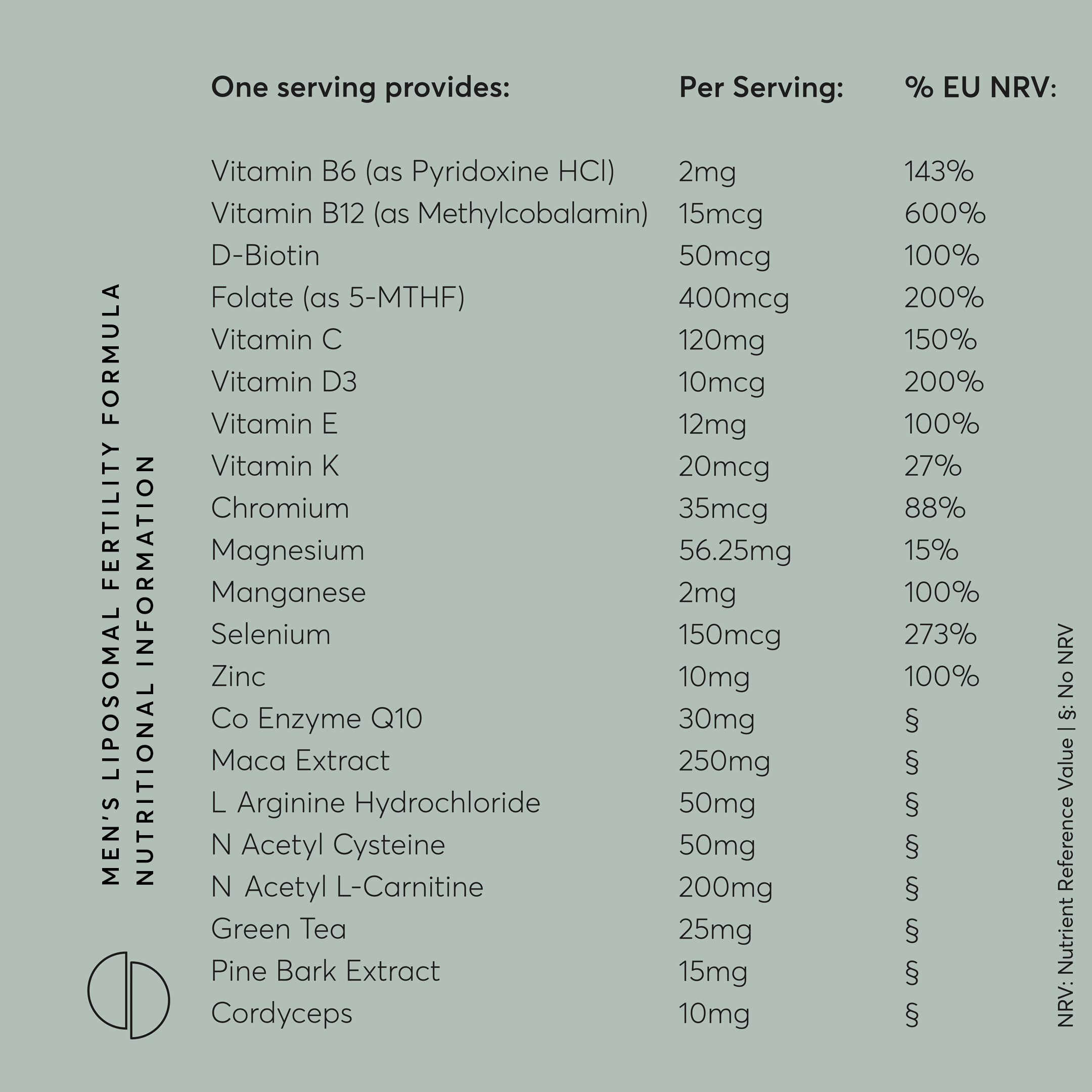
Alongside medical treatment and lifestyle changes, both Sophie and Jordan began taking Naître’s liposomal fertility supplements consistently.
“We’d tried so many different things over the years. But Naître felt different. It wasn’t just another generic supplement.”
What stood out to them was the science behind liposomal delivery — a method designed to enhance nutrient absorption by encapsulating vitamins and minerals in lipid spheres, helping protect them through digestion and improve bioavailability.
“For us, it was about confidence,” Jordan explains. “If you’re taking something daily, you want to know it’s actually being absorbed.”
The couple committed to consistency. Months before their deeper investigations, Sophie had already begun focusing on targeted nutrient support to optimise egg health. Jordan did the same to support sperm quality and they both started taking Naître daily 4 months prior to conceiving.
When Sophie’s ovarian reserve and hormone markers were later assessed, results showed strong egg health — something she believes was supported by long-term nutritional consistency.
But it was during early pregnancy that one specific feature became particularly meaningful.

Sachets, Not Tablets: A Small Detail That Made a Big Difference
“I didn’t realise at first that Naître did pregnancy sachets,” Sophie says. “I was taking pregnancy tablets and I just couldn’t keep them down.”
Morning sickness had hit hard. Swallowing large tablets felt impossible.
“When you’re nauseous and not eating properly, even the smell of some supplements can make you feel worse,” she says. “I tried taking tablets and I just couldn’t tolerate them.”
When she discovered the pregnancy sachets — designed to be mixed into water — the experience shifted.
“Being able to mix it into water and just drink it was so much easier. It made such a difference.”
She laughs remembering the alternative.
“I tried going back to tablets once and it tasted like fish. I couldn’t do it. The sachets in juice? Done. Easy.”
It was a small, practical detail — but during a physically vulnerable stage, it mattered.
Word of Mouth and Quiet Recommendations
Sophie is clear that Naître didn’t enter her life through advertising alone.
“I think it was a friend who mentioned it first,” she says. “Someone I trust.”
Conversations on set and within her circle reinforced the recommendation. Friends navigating their own fertility journeys had quietly shared positive experiences.
“I’ve got friends in the public eye who don’t talk about their struggles — not many people do — but they were taking them too,” she says. “And a guy working on set said he and his partner started taking them, and they fell pregnant not long after.”
“I really, truly believe in this product.”
Importantly, Sophie is careful not to frame it as a miracle solution. She doesn’t attribute pregnancy to one single factor. But she does describe Naître as foundational.
“It felt like we were finally supporting our bodies properly,” she says. “Like we were doing everything we could, in the right way.”

Layered Change: Why Fertility Rarely Shifts From One Thing Alone
Sophie and Jordan’s story isn’t about a single intervention.
It’s about layers:
Deeper investigation beyond surface-level testing. Identifying and treating chronic endometritis. Reducing inflammation. Supporting sperm health. Managing stress. Improving communication. Prioritising nutrient absorption.
Fertility rarely changes because of one isolated action. More often, it shifts when multiple factors begin moving in alignment.
Medical treatment addressed the inflammation. Lifestyle changes reduced stress load. Advanced supplementation supported nutritional status. Emotional reconnection strengthened resilience. Together, those layers created a new internal environment.
For Couples Still Waiting
Sophie and Jordan are deeply aware that sharing their story may be sensitive for others still in the waiting phase.
“We remember being the ones watching other people announce,” Sophie says quietly. “We know how that feels.”
Their message is not that relaxation alone solves infertility. Nor is it that supplements replace medical care.
It’s this: ask deeper questions. Advocate for yourself. Look beyond “unexplained.” Support both partners. Build a foundation, not just a quick fix. And most importantly — don’t navigate it alone.
Science and Support: A Combined Approach
At Naître, the philosophy has always been that fertility support should be layered and intelligent — combining medical insight with advanced nutrition and education.
Sophie and Jordan’s experience reflects that belief.
Their story is not about one product. It’s not about one diagnosis. It’s not about one turning point. It’s about taking control of the variables within reach — from inflammation and immune health to nutrient absorption and male fertility — while seeking clarity on those that require medical intervention.
For them, Naître became part of that structure. Not the headline. But the foundation.
And sometimes, foundations are what make the difference.
If You’ve Been Told Your Fertility Is “Unexplained”
You are not alone.
Unexplained does not always mean untreatable. It may mean further investigation is needed. It may mean looking at inflammation. It may mean reviewing nutrient status. It may mean supporting both partners equally. It may mean building a layered strategy that aligns science, lifestyle and intelligent supplementation.
Because every beginning deserves both clarity — and support.